
The People Side of Strategy: Culture – Everyone Builds It
Note: This article is part of a three-part series highlighting the key tenets I have found that build and sustain a Best Place to Work: culture, employee engagement and organizational development. Throughout the series, I’ll share the practices around creating shared ownership of culture, engaging and supporting employees as they evolve, and investing in developing people for what comes next.
I’ve had the privilege of being part of an organization recognized as a Best Place to Work for the past fifteen years. Culture repeatedly comes out on top for what is valued.
So what exactly is culture? Society for Human Resource Management defines organizational culture as the way things are done within an organization, shaped by shared beliefs and values that influence employees’ perceptions and behaviors. Gallup similarly defines culture as “how we do things around here,” emphasizing that it shows up in how people interact with one another, make decisions and get their work done.
Put together, culture is the shared beliefs, behaviors and everyday experiences that define how people work together. These three elements illustrate how culture is created and sustained.
BELIEFS: What do we stand for?
Every organization has stated beliefs (e.g., mission, vision and core values) that help define what the organization stands for and aspires to be. But just putting them down in writing isn’t enough. If we want our beliefs to shape our culture, they need to be embedded into the systems, policies and practices that shape the employee experience. The goal is to make those beliefs so integrated into how the organization operates that living them becomes intuitive and natural instead of something employees have to consciously remember to do.
An Example:
At Beach Cities Health District, we have intentionally integrated our core values throughout the employee lifecycle in several ways:
Recruitment and Hiring: Interview questions for job candidates connect to our core values, and our second-round interviews include a conversation about our workplace culture. Candidates understand not only what they would be doing, but also the culture they will contribute to.
Performance: Core values are incorporated into our performance appraisal process. Employees reflect in their self-assessment how they demonstrate each value and where they can improve or grow, while supervisors provide their own feedback in the written appraisal as well.
Formal Recognition: Employees can nominate one another for a Core Value Award and recipients are selected by committee. Recipients receive a plaque and are recognized at an all-staff meeting, in our employee newsletter and at a Board of Directors meeting.
Everyday Recognition: Employees can also give a monetary instant award to a colleague who has gone above and beyond in demonstrating our core values.
Shared Ownership: Employees participate in reviewing and updating our core values during each strategic planning cycle, ensuring they continue to reflect who we are and how we will work together.
When what we believe is consistently reinforced by what we hire for, evaluate, recognize, reward and revisit together, our values move from words on paper to shared commitments for how we work together. But shared beliefs only become culture when they show up in how we behave.
BEHAVIORS: How do we put those beliefs into action?
As beliefs describe what matters to us, behaviors demonstrate that we actually mean it. Culture is built through thousands of small interactions every day. This is why culture doesn’t belong solely to leadership or HR; it belongs to everyone.
Think about the everyday behaviors in the workplace that demonstrate the organization’s beliefs. Do we communicate transparently with one another? Do we handle disagreements respectfully? Do we collaborate across teams instead of staying within our silos? Do we step in when a colleague needs help? Do we make space for different perspectives? Do we hold ourselves and one another accountable?
Every interaction is an opportunity to reinforce the culture we say we want.
An Example:
At BCHD, employees crafted a leadership philosophy that states: “Our mission-driven team focuses on collaboration and continuous learning to build a culture of wellness, compassion and fun.”
But just like our core values, having this in writing isn't enough. Employees need to recognize the role they personally play in bringing it to life.
At an all-staff meeting, we asked employees to answer a simple question:
“I live the leadership philosophy each day by…”
Employees talked with one another about the everyday actions and behaviors that demonstrate our leadership philosophy and then identified a personal commitment for how they contribute to it. Their commitments reflected things like supporting colleagues, sharing knowledge, collaborating across departments, being open to learning, admitting mistakes, and bringing humor or compassion to interactions.
These individual commitments help define what we call “The BCHD Way.”
The exercise went beyond asking employees to describe our culture; it asked them to identify their responsibility for creating it. Rather than leadership deciding every behavior, employees defined how they personally contribute to the workplace they want to create.
When employees understand that connection, organizational beliefs become much more tangible. What we value influences how we behave, and how we behave determines the experience we create for the people around us.
EXPERIENCES: What does it actually feel like to work here?
Employees may not remember every policy, leadership message or organizational initiative, but they will remember what it felt like to work at the organization. When employees reflect on their experiences, will they give an emphatic “Yes!” to questions like:
Was I respected?
Could I speak up?
Did my opinion matter?
Was my contribution valued?
Did someone support me when I was struggling?
Was I given an opportunity to grow?
These everyday experiences are evidence of your culture. And because employees evolve, the experience you create for them needs to evolve, too. Your employees aren't the same people they were when you hired them. Their careers change. Their families change. Their priorities change. Their expectations of work change.
Organizations need to evolve alongside them. That means continually asking whether your policies, practices and opportunities still support the workforce you have today and the workforce you will need tomorrow.
An Example:
Supervisors are a linchpin of the employee experience. They have significant influence over whether employees feel heard, supported, valued and able to grow. For many employees, the relationship with their supervisor is where the organization's culture becomes personal.
At BCHD, we create formal opportunities for supervisors and employees to connect beyond the day-to-day work:
“Open-door” policy: At BCHD, accessibility is an expectation of our supervisors. Whether in person, through Teams or by phone, employees know they can reach out when they have a question, need guidance or encounter a barrier to moving their work forward.
Weekly or bi-weekly check-ins: Most employees have regularly scheduled one-on-one meetings with their supervisor. This creates space to check in on how the employee is doing (not just what the employee is doing). All employees are trained in giving and receiving bi-directional feedback, creating an environment where employees feel comfortable providing feedback to their supervisors and trust that it will be heard and received constructively.
Performance and development goals: Performance goals establish what an employee is expected to accomplish, but we place equal importance on development goals. Employees identify areas where they want to grow, and both sets of goals are tracked and discussed together throughout the year.
Career coaching conversations: Supervisors meet with their direct reports at least twice a year to discuss career pathways and development. As a relatively flat organization, advancement can’t always mean moving up. Together, they explore special projects, stretch assignments, training and other experiences that support the employee's longer-term career trajectory.
Team representation: Supervisors look for opportunities for employees to represent their departments at all-staff meetings, task forces, work groups, or presentations. These opportunities allow employees to contribute beyond their role and help others throughout the organization see their capabilities.
Ultimately, culture isn't defined by what we say about our workplace. It is defined by what people experience while they are part of it.
BOTTOM LINE:
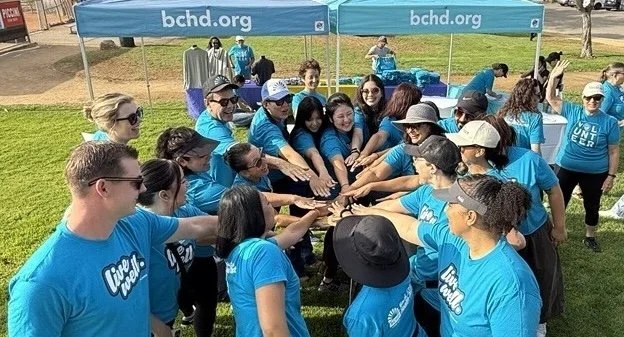
Culture is something we create together.
After 15 years as a Best Place to Work, one thing remains clear: you don't build culture once. You build it every day. Treat culture as a living being that must be nurtured and looked after, just like your employees.
We continually evolve our policies, practices and norms so our culture reflects both who we are today and where we want to go. At the center of it all are our people. Our shared beliefs guide our behaviors, and those behaviors shape the experiences we create for one another and ultimately how we serve our community.
If culture is truly “how we do things around here,” then everyone who works “around here” has a hand in creating it. That is shared ownership of both mission and culture. It is not something leadership creates for employees; it is something we create, reinforce and evolve together.
And at BCHD, that is what we call “The BCHD Way.”